Kuwait Now Charges KD150 to Convert a Visit Visa — and Hundreds of Applications Have Already Been Rejected
On 2 August, Kuwait published a rule that a lot of people read as good news and a lot of agents immediately started selling as an open door. Within four days, residency offices across all six governorates were turning applications away in bulk.
Both things are true at once, and the gap between them is where people are losing money. The fee is real. The permission is not general.
What changed: Kuwait’s Ministry of Interior has set a KD150 fee (roughly US$490) for converting a visit entry visa into a regular residence permit, published through Ministerial Decision No. 1091 of 2026. The fee took effect immediately. It does not create a new right to convert — it prices a facility that remains restricted to specific categories, nationalities and approvals.
That paragraph is the whole story in 55 words. The rest of this guide is who it actually applies to, what it costs on top, and why the single most common reason for applying is also the one that gets refused.
The decision itself, in plain terms
The change was published in the Sunday edition of the official gazette, Kuwait Alyoum, through Ministry of Interior Decision No. 1091 of 2026, which amends Ministerial Decision No. 2249 of 2025 governing the executive regulations of the Foreigners Residence Law. A new Clause 4 was added to Paragraph Nine of Article 39, requiring payment of KD150 for the service of converting a visit visa into a regular residence permit under Article 16 of the executive regulations.
Two details matter more than the number itself.
First, the amendment sits inside the fees article of the regulations, not the eligibility article. It tells you what conversion costs. It says nothing about who is allowed to do it — those rules were already there, and they did not loosen.
Second, the amended rules took effect immediately on publication in the Official Gazette, and domestic workers and equivalent categories are exempt from the fee under Article 20 of the regulations. There is no transition period and no grandfathering.
What happened in the four days after
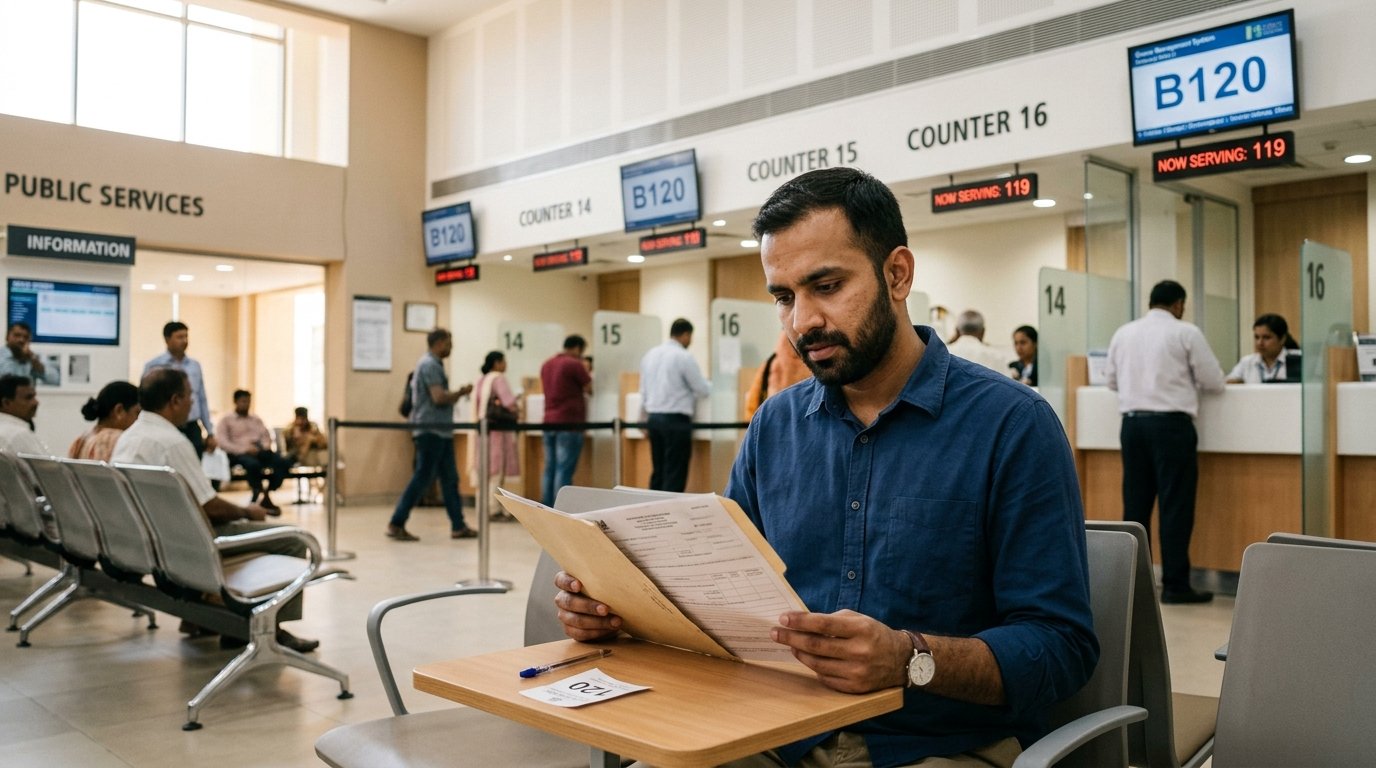
This is the part most coverage left out. By 6 August, hundreds of expatriates had applications refused after failing to meet the conditions — large numbers of people submitted at residency departments across Kuwait’s six governorates believing the decision applied to everyone, and many were rejected for not complying with eligibility requirements, while others stayed under review pending approval.Officials were explicit that conversion under Articles 17, 18, 20 and 22 is not open to all expatriates or all nationalities, with each case assessed individually and subject to approval by the Director General of the General Department of Residency Affairs.
Some categories additionally require clearance from senior officials at the Ministry of Interior, and governorate offices receive applications based on the applicant’s registered address before forwarding them electronically after checking compliance.
Read that as a system where a rejection costs you time and travel, and where nationality is one of the filters. It is not a counter service with a fixed price list.
Who can actually convert: family residency
This is the route that genuinely works, and it is the one the fee was most likely designed around.
Eligible residents may convert family visit visas into Article 22 family residency for wives, sons under 18, and unmarried daughters under 21. The sponsor must earn a minimum monthly salary of KD800 and pay the KD150 conversion fee, on top of health insurance and residency stamp charges.
So the real cost is not KD150. It is KD150 plus insurance plus stamping, per dependent, and it is gated behind a salary floor of KD800 a month — around US$2,600. That threshold quietly excludes a very large share of the South Asian workforce in Kuwait, and it is the single most common reason a family application fails before anyone looks at the paperwork.
Two humanitarian exceptions exist:
Children under five whose mothers already hold valid Kuwait residency may be covered, and wives whose previous residency expired less than one year earlier may also qualify — in both cases subject to payment of the prescribed fees and approval from the Director General of Residency Affairs. These are considered individually, and the final decision rests with the Director General.
“May qualify” is doing real work in that sentence. Treat it as a discretionary review, not an entitlement.
Who cannot convert: the job-seeker route
Here is the part being mis-sold in WhatsApp groups right now, and the reason this article exists.
Visit visas issued to spouses and children cannot be converted into Article 18 employment residency at all. They may only move to Article 22 family residency, and only if the conditions are met.
For everyone else, employment conversion is a narrow list, not a general option. Conversion to a work residency is allowed only in limited cases: people invited by government ministries, public authorities or government institutions who hold higher academic qualifications or specialised technical skills; domestic workers and similar categories covered under the regulations; and individuals who entered Kuwait on a work visa, began residency procedures, but were forced to leave before completing them — who may return within one month on a business visit visa to finish the process.Business visit visas may themselves be converted to employment residency only in cases the regulations permit, and with approval from senior Ministry of Interior officials.
Notice what is absent from that list: the ordinary job seeker. There is no path here where you arrive on a family or tourist visit visa, find an employer, pay KD150 and walk out with an Article 18. That route does not exist in this decision, and the rejections reported in the first week are largely people who assumed it did.
If someone in Pakistan or India is offering to send you to Kuwait on a visit visa “because the residency rule has opened,” they are describing a rule that was never written.
Why the confusion spread so fast
Three things happened together. A fee was announced with a specific number, which makes any rule feel concrete and available. It landed at a moment when Gulf labour demand for Pakistani workers is genuinely rising — Kuwait’s lifting of its long-standing visa ban on Pakistani citizens restored access to work, family, tourist and business visas and opened recruitment in healthcare, oil and skilled labour. And the fee text is short enough to screenshot, while the eligibility rules sit in a separate part of the regulations that nobody screenshots.
A published fee is not a published permission. That distinction is worth internalising, because it repeats across every Gulf and European system this site covers.
What this costs in real money
| Item | Amount | Notes |
|---|---|---|
| Conversion fee | KD150 (~US$490) | Per person; domestic workers exempt |
| Sponsor salary floor (family) | KD800/month (~US$2,600) | Must be met before applying |
| Health insurance | Variable | Charged separately |
| Residency stamping | Variable | Charged separately |
Local-currency equivalents move with the exchange rate, so check the day’s KWD rate against PKR or INR before you budget. Anyone quoting you a fixed rupee figure weeks in advance is guessing.
If you’re in Kuwait and want to apply
Work through this in order, because the failures cluster at the top.
- Confirm the article you’re applying under. Family conversion is Article 22. Employment is Article 18. They have different rules and are not interchangeable.
- Check the salary floor first. If the sponsor’s documented monthly salary is below KD800, an Article 22 application will not succeed regardless of everything else.
- Check the dependent’s age and status. Sons under 18, unmarried daughters under 21, wives.
- Budget the full cost, not just KD150.
- Apply at the residency department for your registered address. Applications are routed by governorate before going to the Director General.
- Expect individual assessment. Approval is discretionary, some categories need senior MOI clearance, and nationality is a factor.
- Verify against the Ministry of Interior directly. Regulations amended by gazette can be amended again by gazette.
If you’re outside Kuwait looking for work
The honest summary: this decision gives you nothing. It is a fee schedule for people already legally in Kuwait, in specific categories, with sponsors who meet a salary test.
The legitimate route into Kuwait for employment is still an employer-sponsored work permit filed through the Public Authority for Manpower against an approved company quota, with the residency and Civil ID issued afterwards. It starts with a job offer from a licensed sponsor, not with a plane ticket on a visit visa.
Anyone selling you the reverse is selling you a KD150 receipt and a rejection.
Key Takeaways
- Kuwait set a KD150 fee (about US$490) to convert a visit entry visa into a regular residence permit, under Ministerial Decision No. 1091 of 2026, effective on publication on 2 August.
- The fee prices an existing facility. It does not create a new right to convert.
- Family conversion (Article 22) is the workable route: wives, sons under 18, unmarried daughters under 21 — with a KD800 minimum monthly salary for the sponsor, plus insurance and stamping costs.
- Spouse and child visit visas cannot become Article 18 work residency. Employment conversion is limited to government-invited professionals with higher qualifications or specialised skills, certain domestic worker categories, and workers returning within one month to finish an interrupted process.
- Domestic workers and equivalent categories are exempt from the KD150 fee.
- Hundreds of applications were already refused in the first week. Approval is individual, discretionary, and not open to all nationalities.
FAQ
Q1. How much does it cost to convert a visit visa to residency in Kuwait?
The government fee is KD150, roughly US$490, introduced under Ministerial Decision No. 1091 of 2026. For family residency you also pay health insurance and residency stamping charges, and the sponsor must earn at least KD800 a month. Domestic workers and equivalent categories are exempt from the KD150 fee.
Q2. Can I convert a Kuwait visit visa into a work visa?
In almost all cases, no. Visit visas issued to spouses and children cannot be converted into Article 18 employment residency. Conversion to work residency is limited to people invited by government bodies who hold higher academic qualifications or specialised technical skills, certain domestic worker categories, and workers who began residency procedures, had to leave, and return within one month on a business visit visa.