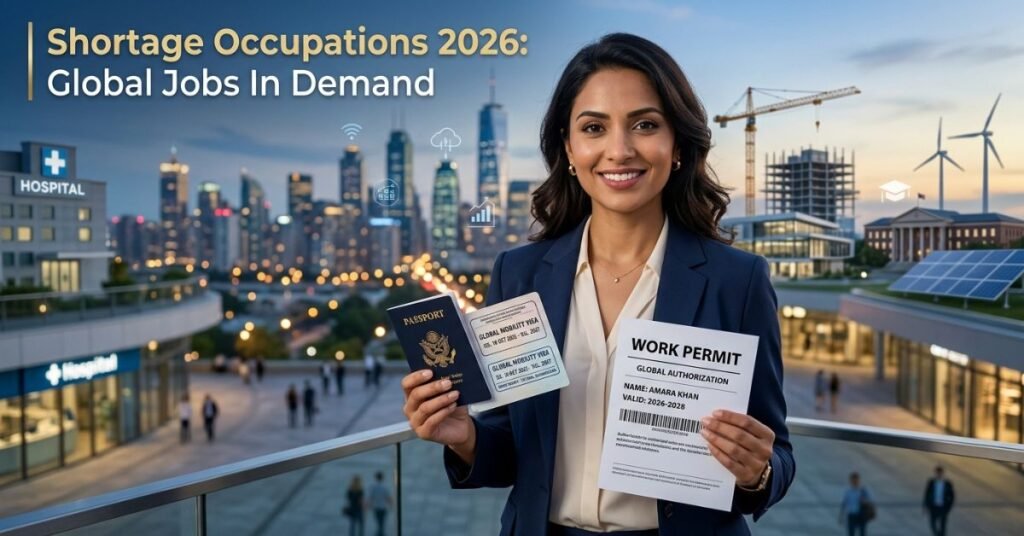
Shortage Occupations 2026: Global Jobs In Demand
A power engineer may be hard to hire in one region while a qualified teacher is difficult to find in another. That difference is the key to understanding shortage occupations in 2026: demand is shaped by local population needs, investment, training capacity and policy—not by one global list.
Quick answer: There is no official worldwide shortage occupation list for 2026. Across many economies, employers report needs in healthcare, education, information technology and selected technical fields, but local demand varies. A job’s shortage status does not guarantee an offer, a high salary or a work visa; verify each country’s current rules and vacancies.
Key points
- A shortage in one country may not exist in another.
- Forecasts for fast-growing jobs are not the same as proof of a current worker shortage.
- Healthcare, education, digital technology and some engineering roles recur across multiple labor-market studies.
- Before choosing a training path or moving, check local vacancy data, credential rules and work authorization requirements.
What “Shortage Occupation” Means Around The World
“Shortage occupation” sounds like a universal category, but governments and researchers use different definitions. One system may count vacancies that remain unfilled for a long time. Another may look at wage growth, employer surveys, unemployment among qualified workers or a shortage of specific skills. Some governments also publish occupation lists for migration programs, which are policy tools rather than complete pictures of hiring demand.
That distinction matters. A profession can be in demand without appearing on a visa list. A job may appear on a migration list but still have few openings in a particular city. And a fast-growing occupation may be gaining jobs without employers struggling to recruit qualified workers today.
The OECD’s cross-country Skills for Jobs database tracks occupational and skill shortages across 44 countries. Its analysis identifies recurring pressure in medical and personal care professions, teaching and information and communications technology, while also finding shortages in some service roles. That pattern is useful for comparison, but it does not mean every country has the same openings or requirements.
| Term | What it usually tells you | What it does not prove |
|---|---|---|
| Shortage occupation | A country or study has identified recruitment pressure in a particular role or skill area. | That every employer is hiring or that a foreign applicant qualifies for a work permit. |
| Fast-growing occupation | Employment in that role is expected to expand over a defined period. | That employers cannot currently find enough qualified applicants. |
| Critical occupation | A government or sector may consider the work important to public services or the economy. | That the job is open to every applicant or appears on a migration route. |
| Visa or immigration list | A role may receive specific treatment under a country’s immigration rules. | That the list is a broad forecast of all jobs in demand. |
Key point: Treat a shortage label as a lead for further research. The job duties, location, experience level and hiring rules determine whether the opportunity is real for you.
How Global Hiring Priorities Changed In Recent Years
Several long-running changes have influenced hiring: populations are aging in some places and growing rapidly in others; digital tools have spread across industries; governments and companies are investing in energy transitions; and employers are redesigning jobs as automation changes how work is done.
The World Economic Forum’s 2025 report draws on employer expectations across 55 economies and projects that a mix of technological change, demographic shifts, economic uncertainty and the green transition will reshape work through 2030. It highlights demand for technology-related skills including AI and big data, cybersecurity and technological literacy—alongside roles connected to healthcare, education and renewable energy. These are forecasts from employers, not an official global shortage register.
At the same time, the International Labour Organization’s 2026 outlook emphasizes that global employment figures can hide gaps in job quality and access to work. Its estimates point to a large number of people who want paid work but cannot access it. A labor market can therefore have employers struggling to fill specialized roles while many people remain underemployed or shut out of suitable work.
This is why “jobs in demand” should not be read as “easy jobs to get.” Shortages often reflect a mismatch: employers need a particular license, language, location flexibility, experience level or technical skill that many applicants do not yet have.
The Recurring Job Families In 2026
The table below summarizes job families that appear repeatedly in international skills and employment discussions. It is a starting map, not a ranked global list. Specific occupations, salaries and qualification standards can differ sharply between countries.
| Job family | Why demand may appear | What applicants should investigate |
|---|---|---|
| Healthcare and care | Aging populations, expanding access to care and staffing pressures in health systems | Licensing, language tests, credential recognition, shift work and local registration |
| Education and training | Growing school-age populations in some regions, teacher turnover and demand for specialized instruction | Teaching credentials, subject area, language requirements and regional hiring plans |
| Digital technology and cybersecurity | Businesses and public services depend on software, data, cloud systems and secure networks | Portfolio, practical experience, recognized certifications and the exact job level |
| Engineering and infrastructure | Investment in transport, housing, utilities, manufacturing and energy systems | Professional registration, safety standards, project experience and local codes |
| Renewable energy and environmental work | Energy transition projects and climate adaptation require new technical and analytical skills | Relevant engineering or science background, field experience and project location |
| Skilled trades and maintenance | Construction, industrial operations and utilities rely on experienced hands-on workers | Trade certification, safety training, apprenticeships and local licensing |
| Selected service roles | Tourism, food service and personal services can experience high turnover or seasonal demand | Pay, contract length, hours, seasonality and whether the work supports long-term career growth |
The OECD’s findings help explain why the list includes both highly specialized professions and service work: shortages are not limited to graduate-level occupations. Still, the same job title can describe very different duties and skill levels across countries.
Healthcare And Care Work
Healthcare is a recurring pressure point, but it is not one occupation. Hospitals may seek physicians, nurses, laboratory staff, pharmacists, therapists or technicians; community services may need care workers and support staff. Each role has separate training and licensing requirements.
The World Health Organization continues to project a substantial global health-workforce shortfall by 2030, while also warning that progress and staffing conditions differ across regions. The worldwide estimate is a signal of broad pressure—not evidence that every health profession is short everywhere, or that every country welcomes new international applicants under the same rules.
For internationally trained professionals, credential recognition can be the longest step. A degree that qualifies someone to practice at home may not automatically meet another country’s clinical standards. Applicants should check the regulator’s assessment process before paying for recruitment or relocation services.
Education And Training
Teacher demand often depends on population growth, school budgets, subject specialization and the location of schools. Some regions may need teachers for expanding student populations; others may have openings in specific subjects or rural areas rather than a broad national shortage.
Education roles also include vocational instructors, language teachers, special-needs specialists and adult trainers. These jobs can require different licenses. A shortage claim from a national headline may not apply to the grade level, subject or city where an applicant hopes to work.
Technology, Data And Cybersecurity
Digital demand spans more than software development. Organizations also need people who can protect systems, manage cloud infrastructure, interpret data, integrate software into business processes and support users. The WEF’s 2025 employer survey identifies AI and big data, cybersecurity and technology literacy among the fastest-growing skill areas through 2030
A person does not necessarily need to become an AI researcher to benefit from this trend. Employers may value data fluency or secure-system knowledge inside finance, healthcare, manufacturing, logistics and public services. For many applicants, combining a core profession with practical digital skills can be more useful than chasing a fashionable job title.
Engineering, Trades And Infrastructure
Engineering hiring follows investment. Construction, transportation, manufacturing, water systems and energy projects need workers with a mix of design, maintenance, safety and project-delivery skills. Some jobs require professional registration; others rely on apprenticeship pathways and trade certification.
The challenge is that technical credentials are not always portable. Electrical codes, building regulations, safety standards and professional licensing vary by jurisdiction. Candidates should identify the local equivalent of their qualification and learn whether an employer will accept it or require bridging courses.
Renewable Energy And Environmental Work
The energy transition can create demand for renewable-energy engineers, grid specialists, technicians, environmental analysts and project managers. The WEF identifies climate mitigation, adaptation and energy technologies among factors likely to shape work through the end of the decade.
But “green jobs” cover a wide range of work. Some positions require advanced engineering skills; others involve installation, inspection, construction or maintenance. Hiring can rise and fall with project approvals, financing and government incentives, so applicants should look at actual investment and vacancies in the region they are considering.
What Applicants Should Compare Before Choosing A Country
A global demand list cannot tell you where your own prospects are strongest. Compare a few specific countries and occupations using the same questions each time.
| Comparison question | Why it matters |
|---|---|
| Are there current vacancies in my specialty? | A broad shortage claim may not match the job level or city you can work in. |
| Is my qualification recognized? | Licensing and credential checks can take months and may require additional training. |
| What is the language requirement? | Daily workplace communication, safety and professional registration may require fluency. |
| Can I legally work there? | Shortage status does not itself provide a visa or work permit. |
| What are typical pay and living costs? | A strong salary figure may be less attractive after taxes, housing and relocation expenses. |
| Is the work stable or seasonal? | Some jobs are tied to a project, harvest, tourism season or temporary funding. |
| What is the career path? | Look for training, progression and portable experience, not only the first offer. |
A Practical Search Plan For International Applicants
1. Pick a job family and define your role. “Healthcare” or “technology” is too broad. List your specific duties, qualifications and experience level.
2. Choose two or three target countries. Start with places where your language, credentials and work history are relevant. Avoid assuming that the country with the loudest shortage headlines will be the easiest to enter.
3. Check official labor-market information. Look for national vacancy data, occupation outlooks, public-sector hiring plans and professional regulator guidance. Confirm the date and geographic scope of every list.
4. Compare job advertisements. Note the required credentials, experience, pay range, location, language and work authorization conditions. Several current advertisements can tell you more than a broad social-media post.
5. Contact the regulator where needed. For a regulated occupation, find out what documents, exams, supervised practice or language scores are required before you accept a job.
6. Build evidence of your skills. Keep licenses, translated transcripts, references, project examples and proof of continuing education organized. Digital candidates can also prepare a portfolio; tradespeople may need documented hours and safety certificates.
7. Verify recruitment agencies and employers. Confirm the employer’s identity through official company channels. Be wary of anyone promising guaranteed employment, a visa or a shortcut in exchange for large upfront payments.
Where Things Stand In 2026
There is no single worldwide shortage occupation list because labor markets, immigration systems and professional standards are national or regional. Still, cross-country evidence points to recurring needs in health and care, education, digital technology, and selected engineering, infrastructure and energy roles. Forecasts suggest those areas will keep changing, but forecasts are not guarantees of job openings or migration eligibility.
The best next step is to track the official labor-market and licensing information for the country you have in mind. Check the occupation, location, credentials and work authorization together. For digital careers, watch how employers define practical AI, data and cybersecurity skills. For healthcare and education, follow licensing rules and regional recruitment plans. For trades and energy work, pay attention to funded projects and recognized certifications.
A practical next-step list
- Choose one occupation and two or three possible destinations.
- Check current vacancies and the relevant government job outlook.
- Confirm qualification recognition and language requirements.
- Review work-permit rules separately from shortage claims.
- Compare pay, living costs, contract stability and progression before relocating.
FAQ
Is There One Global Shortage Occupation List For 2026?
No. Governments and research organizations use different definitions and publish lists for different purposes. Some measure employer difficulty filling roles; some forecast future growth; immigration lists determine how particular jobs are treated under a country’s visa rules. Always check the country and purpose behind a list.
Which Jobs Are In Demand Worldwide In 2026?
Cross-country studies repeatedly identify needs in healthcare and care, education, digital technology and selected technical fields. Demand is not uniform: one country may need a particular kind of nurse or engineer, while another has limited vacancies in that specialty. Check local hiring data and requirements.
Are Fast-Growing Jobs The Same As Shortage Occupations?
No. A fast-growing job is expected to add employment over a set period. A shortage occupation describes difficulty filling available roles under a particular measure. A field can grow without having an immediate worker shortage, and employers can face a shortage in a field that is not among the fastest-growing.
Does A Shortage Occupation Automatically Qualify For A Work Visa?
No. Visa eligibility depends on the destination country’s rules, the exact role, the employer, the applicant’s credentials and any applicable salary or language requirements. A shortage label may influence a policy, but it does not grant a visa by itself.
What Should I Do Before Training For An In-Demand Career?
Check whether employers are hiring for the specific job you want, which qualifications they require and whether those credentials are recognized where you plan to work. Compare training costs and time with realistic entry-level pay, licensing steps and career progression.



Join the discussion
Please do not post passport numbers, phone numbers or other private information. This website does not process visa applications.